EN / 中文
 Luca - Designer at Reflex Paris
Some objects are built from metal and light. Others are built from belief. A shared belief, shaped by emotion, history and collective memory.
The Statue of Liberty is made of copper and steel, yet what it truly carries cannot be measured in tons. It carries hope, exile, alliance, and the enduring promise of freedom. In Paris, during the Olympic Games, the flame echoed that same gesture. Through EDF’s technological mastery - water, light, and invisible engineering - fire was recreated without combustion. Not as a spectacle of power, but as a symbol of possibility.
This tale is the one of a project which Reflex ideated.
"Our idea was simple: to translate that luminous innovation into a universal language, one that connects Paris to New York, and technology to freedom."
Back in 1886, the Statue of Liberty was already a feat of engineering, born from Bartholdi’s vision and Eiffel’s ingenuity. Crafted from copper, granite, and gold leaf, it was more than a gift - it was a statement of France’s gratitude to the United States, a monument that combined artistry with technical mastery to become one of the most iconic and ambitious sculptures in the world.
Fast forward to 2024: France gathered brilliant minds to create a new bearer of the Olympic flame. Not a flame in the traditional sense, but a caludron, a balloon with a celestial presence, floating above Paris during the Games and beyond. In reality, it contained no fire at all. Instead, water and carefully placed LED lights created a controlled, almost magical flame, as EDF’s engineers explained.
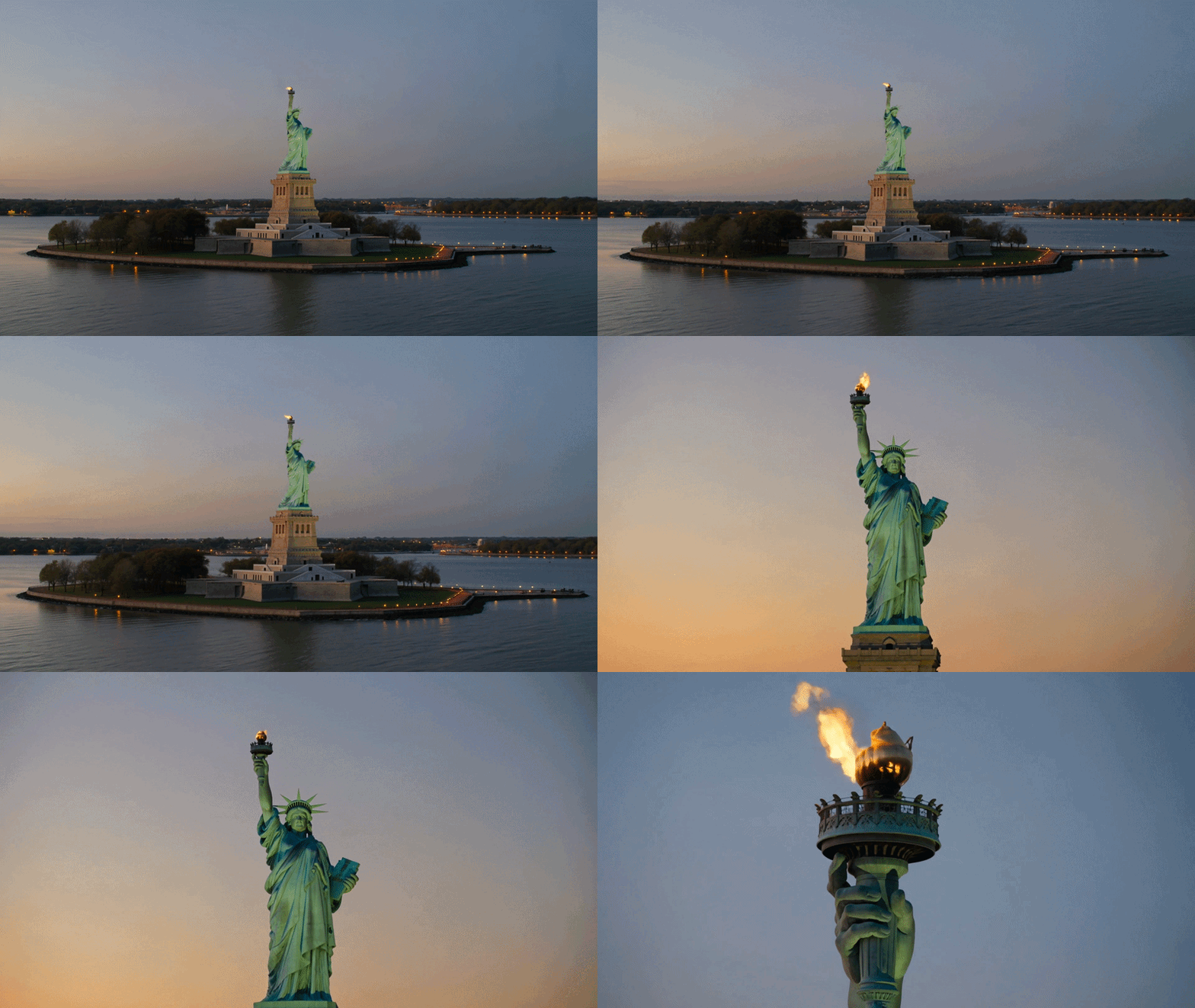
This technological and poetic feat captured the imagination of the public, letting the flame shine longer, higher, and more vividly than ever in the heart of the capital. REFLEX imagined taking this same gesture further: using this technology, the Statue of Liberty could be reinterpreted centuries later, continuing to inspire, to spark wonder, and to reaffirm its historical and symbolic power. Here, modernity and technology do not simply illuminate, they set the stage.
Every era stages its own vision of progress. In the 19th century, engineering was monumental. In the 21st, it became atmospheric, almost immaterial. As Mathieu Lehanneur reflects, “Every time I design a new object, I wonder how it will pass through the filters of our visual archives”. The VASC was never meant to be just a technical device. It was conceived as an image, one that could enter our collective memory, much like the Statue of Liberty did over a century ago. Designing energy today means designing how it will be seen, remembered, and interpreted. No longer invisible, energy becomes narrative. It carries values, responsibility, and emotion.
"The future of energy will be judged as much by what it means as by what it powers."
For us, the gesture remains the same: to make light visible and to give it meaning, shaping our collective memory. This is what REFLEX is about : creating while conveying messages that matter. Still, a glimmer of hope remains. When circumstances align, ambition follows, and with it, the freedom to dream at scale.
Project Timeline
June 2025 - The idea took shape during a conversation about the Statue of Liberty’s 140th anniversary and a central question: does she still embody the promise she once represented?
July 2025 - We explored how France could meaningfully respond, identifying EDF’s Olympic electric flame as a contemporary symbol of that legacy.
September 2025 - Technical exchanges with EDF confirmed the feasibility of adapting this innovation to relight Liberty’s torch.
December 2025 - Institutional and private partners aligned around the vision, consolidating diplomatic and financial support.
February 2026 - With cultural and strategic backing secured, discussions were opened with the National Park Service, the final authority required to bring the project to life.